


Backfill – The Other Tailings Storage Facility: Part 1
Promoting the Role of Backfill in Tailings Management
For many years, tailings management and mine backfill have largely been treated as separate processes. Is this still the right way to think? As the mining industry continues to reconsider how tailings are managed, there is an opportunity to take a more integrated view. In this three-part series we explore how backfill can become the primary tailings storage facility.
 by Maureen McGuinness

From Theory to Practice: Backfill Engineering in Action at Our 2026 Course
Paterson & Cooke recently welcomed mining professionals to Cape Town, South Africa, for our annual Backfill Design & Operation Course, held from 7 to 9 September 2026. We reflect on the highlights, and find out what our delegates had to say about this event.
 by Bruno Salvoldi
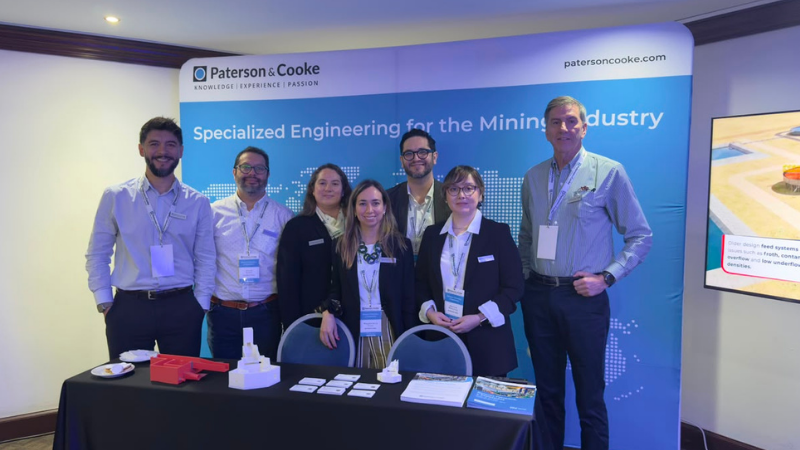
Shaping the Future of Tailings Management in South America
Paterson & Cooke brought together more than 80 mining professionals in Lima to explore the future of tailings management through our Filtered and Thickened Tailings Course. Read more about this successful event.
 by Daniel Alamos
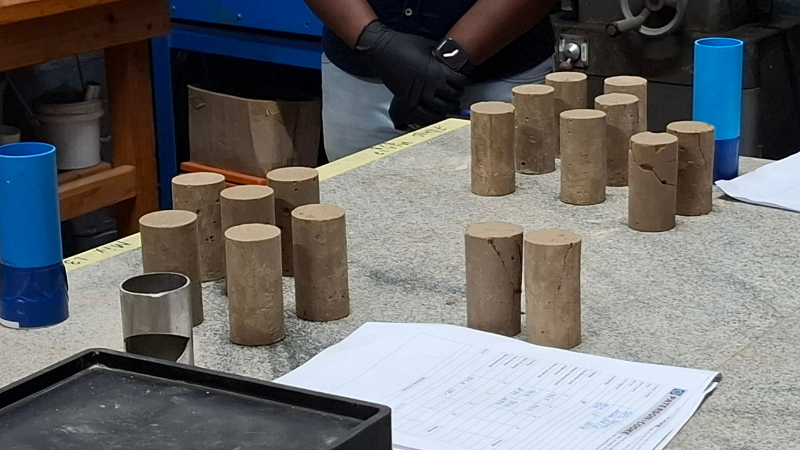
Paterson & Cooke Chile Expands Laboratory Capabilities with Uniaxial Compressive Strength (UCS) Testing
Reliable laboratory testing plays a critical role in the design and optimisation of cemented mine backfill systems. Paterson & Cooke is proud to announce that our Santiago, Chile laboratory has expanded its capabilities by implementing UCS testing. This investment further strengthens our global network of specialist laboratories, which now all offers backfill testing.
by Daniel Alamos
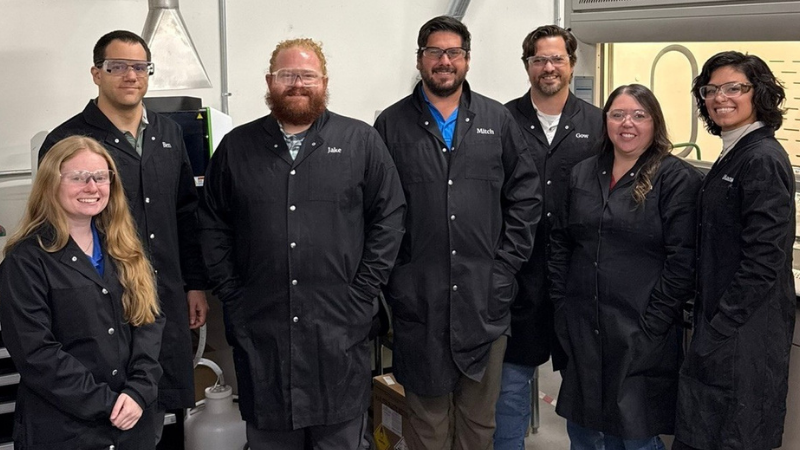
Paterson & Cooke’s Denver Laboratory celebrates ISO 9001 certification
Achieving ISO 9001 certification marks an important milestone for Paterson & Cooke’s Denver Laboratory. Learn how the team’s dedication to quality and operational excellence has strengthened our laboratory capabilities and enhanced the services we provide to our mining clients.
 by Nick Gow
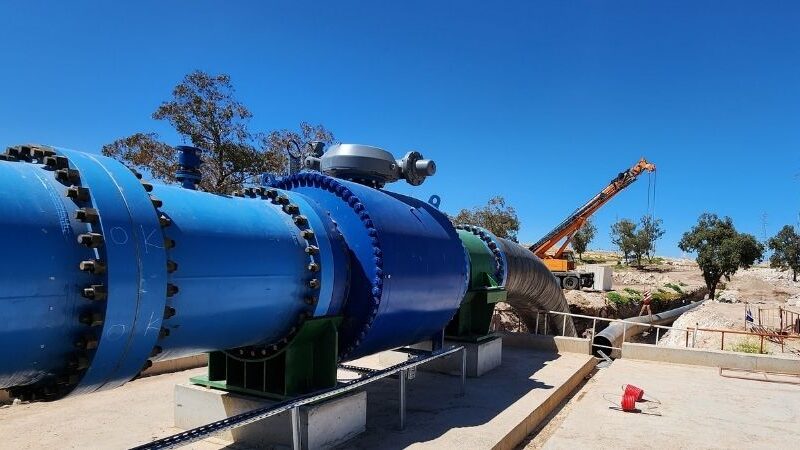
Delivering One of Morocco’s Most Significant Water Infrastructure Projects
Water security has become one of the defining engineering challenges facing the mining industry globally. Read more about how this challenge took centre stage in Morocco with the successful commissioning of the Jorf Lasfar to Khouribga (J2K) desalinated water pipeline system.
 by Julian Rusconi
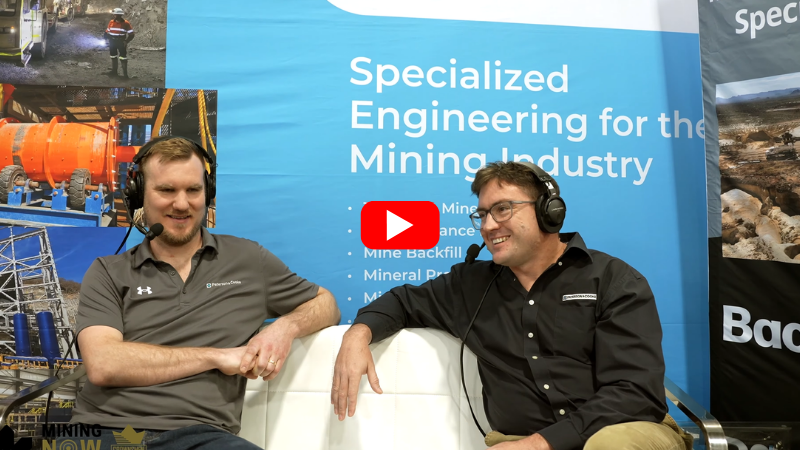
Why Mine Backfill Has Become Critical to the Future of Underground Mining
Watch as our industry experts break down how modern mine backfill systems are transforming underground mining operations around the world. From pastefill technology and cemented rock fill systems to large-scale integrated mine infrastructure, this conversation reveals why mine backfill has become one of the most critical parts of modern mining engineering.
 by Leslie Correia

Why Proper Sampling Matters in Mineral Processing Testing
In mineral processing testing, good data starts with good sampling. No matter how advanced the equipment or how detailed the test work is, the results are only as reliable as the sample being tested. Read more about the factors that make the biggest difference in reducing technical risk and generating reliable metallurgical data.
by Nick Gow

Supporting Smarter Tailings Water Decisions Through Engineering Insight
The article explores the growing importance of effective tailings water management as mining operations face increasing pressure to reduce water consumption, improve environmental performance, and adapt to site-specific challenges.
 by Rachel Jansen
Field monitoring of an undercut paste backfill and implications for analysis and design
Mining underneath previously placed backfill can offer important operational efficiencies for underground mines. The paper concludes with recommendations for analysis and design of future undercut backfills.
 by Amin Jafari

The importance of transient analysis in successful design and operation of underground paste distribution systems
This paper highlights the importance of incorporating transient analysis into the design phase of paste backfill distribution systems, particularly for complex networks with multiple discharge locations, elevation changes, or long pipe runs.
 by Kelvin Creber

White paper: Portland-limestone cements in paste backfill – performance limits and hidden environmental costs
This paper re-assesses the role of Portland-limestone cements in cemented paste backfill by reviewing underlying mechanisms, published performance data, and environmental implications.
by Bruno Salvoldi

Interpreting laboratory liquefaction test results: the importance of confining pressure to unconfined compressive strength ratios
Laboratory liquefaction testing programs on cemented paste backfills have been based on methods used in conventional geotechnical earthquake engineering. The findings from this study can be used to better design future experimental programs to assess cemented paste liquefaction potential for projects both underground and on surface.
 by Murray Grabinsky

An update to the Grabinsky et al. (2021) plug strength method
Grabinsky et al. (2021) proposed an analysis method based on a failure mechanism motivated by the Prandtl approach to design structural footings in clays. Read the update to this publication.
by Murray Grabinsky

Strengthening Expertise at Our Latest Cape Town Slurry Pipeline Course
Paterson & Cooke brought together industry professionals in Cape Town, South Africa, for another successful Slurry Pipeline & Principles Course, held from 9–12 March 2026.
 by Angus Paterson

Designing High-Performance Paste Backfill Systems at MMG Khoemacau Zone 5
In this technical article, we look at the design of the paste backfill system for MMG Khoemacau Zone 5 Mine, where long paste reticulation distances, high-pressure pumping requirements, and ultra-fine tailings presented a number of engineering challenges.
by Bruno Salvoldi

Rethinking Tailings Management in a Changing Mining Landscape
Industry evaluations often default to cost-focused comparisons, typically capital and operating cost of the process equipment, tailings transportation system, or material handling fleets. Given growing concerns around water scarcity, this article highlights the need for a holistic, systems-based approach that integrates technical, environmental, and operational drivers.
by Rachel Jansen

From Dilute Slurry to Controlled Flow: The Critical Role of Thickening in Modern Process Circuits
Thickening is one of the most fundamental unit operations in mineral processing and hydrometallurgical flowsheets. At its core, the process involves separating solids from liquid by gravity settling, producing a clarified overflow stream and a concentrated underflow slurry.
 by Malcolm Gillespie

Static Cylinder Settling Test – A Simple Test That Delivers High Value
Static cylinder settling tests are a fundamental part of understanding slurry settling behaviour. Although the procedure is simple, the test provides valuable insights into slurry system surface chemistry and solid-liquid interaction, allowing optimisation of tailings dewatering.
by Rachel Jansen

Paterson & Cooke South America Hosts Technical Training on Tailings Solutions
In October, Paterson & Cooke South America held the “Thickened, Paste, and Filtered Tailings Course” at the Icon Hotel, in Santiago, Chile. Over two days, topics such as Transport, Thickening, Filtration, and Backfill were covered, along with practical laboratory demonstrations that allowed for a deeper understanding of these subjects.
by Daniel Alamos

Why Paste Pump Performance Matters in Underground Backfill Systems
When it comes to backfilling mines with paste, transporting the paste material from the surface plant down into the stopes is critical. The reliability of this transport network, known as the underground distribution system (UDS), directly impacts mining schedules, binder consumption, and ultimately, operating costs.
by Leslie Correia

Understanding Coagulation & Flocculation in Slurries
Efficient slurry dewatering is key to many mining and mineral processing operations, and two of the most important processes involved are coagulation and flocculation. This short demonstration provides a clear and practical look at the fundamentals of coagulation and flocculation to optimise reagent usage.
by Rachel Jansen

From Flow to Future: Managing Long-Distance Pipelines
Long-distance pipelines are critical mining assets transporting valuable concentrates like copper and iron. We take a look at how to keep pipelines safe & reliable, and how to embed integrity management into planning.
 by Leonardo Olavarria

Understanding the Boger Slump Test for Paste Characterisation
In this short video, we demonstrate the Boger Slump Test, a simple, yet effective method used to assess the yield stress and flow behaviour of paste materials and high-density slurries.
by Leslie Correia

Strengthening Backfill Know-How: Wrapping Up Another Successful Course
Paterson & Cooke recently hosted another successful Backfill Design & Operation Course in Sudbury, Canada. We recap the course content, reflect on the highlights from 2025, and find out what our delegates had to say about this event.
 by Alexandra Hiles

The Future of Structural Design: How AI is Revolutionising the Industry
AI is evolving rapidly, and its role in structural engineering will only grow. We investigate how AI is proving to be a game-changer, enhancing efficiency, accuracy, and innovation in structural design.
 by Tiago Ribeiro

How a Scale Model Helped Solve a Big Tailings Distribution Challenge
See how our team ensured even flow distribution in a newly designed tailings distribution box—before building it full-scale. The solution? Build a physical model at reduced size and simulate real-world behaviour in the lab.
 by Diego Hoebel

Understanding the Bench Scale Dynamic Thickener Test – A Key Step in Thickener Design
In this short video, we showcase the Bench Scale Dynamic Thickener Test, a critical laboratory procedure used to evaluate the settling behaviour and underflow characteristics of slurries in a controlled environment.
by Rachel Jansen

From Ore to Outcome: Paterson & Cooke Strengthens Hydrometallurgical Capabilities
Paterson & Cooke has significantly expanded its hydrometallurgical and mineral processing capabilities at the Cape Town office. This development positions the facility as a centre of excellence for integrated process testing and flowsheet development.
 by Jean Jacques Mbayo

Experts in Slurry Pipelines, Mine Backfilling, Mine Waste Systems and Mineral Processing
With over 30 years of experience and 9 offices worldwide, our global presence offers local knowledge, paired with international expertise. Find out more about our services in this article.
 by Natasha van der Merwe

Enhancing Mine Planning Efficiency with Client Collaboration
Our industry experts Todd Wisdom, Rachel Jansen, and Kathy Adams had the privilege of being interviewed for a Mining Now episode. They share their insights on the pressing challenges faced by the mining sector and how Paterson & Cooke’s pioneering solutions are reshaping the future of mineral processing and tailings management.
 by Kathy Adams

Hydraulic Phenomena of a Long-Distance Pipeline with Tight-Lined Positive Displacement Pumps
Watch Joel Petraglia for a deep dive into the unique hydraulic phenomena that arise in these systems. This webinar explores how PD pump operation and line packing interact, providing essential insights for designing, controlling, and troubleshooting such systems.
 by Joel Petraglia

Analysis of an instrumented tight-filling-induced paste containment wall failure and lessons learned for safe backfilling
This case study from the Jabal Sayid Mine demonstrates how operating procedures, and particularly a well-designed exclusion zone with catchment berm, successfully mitigated the consequences of a wall failure.
 by Paul Carmichael

Case study: Media Luna paste system
Discover the unique challenges encountered and the difficult yet necessary decisions to ensure that Torex will have a world-class paste plant when backfill operations start-up in 2025.
 by Brent Robitaille

Micro paste: producing paste backfill utilising ultra-fine copper tailings
This paper compares three case studies that explore test work on ultra-fine copper tailings with a significant micro-sized fraction, providing insights into the solutions for achieving effective paste backfill in these new mining environments.
by Bruno Salvoldi

Pressure filter collection systems: sizing and optimisation
This paper covers the surge discharge rate calculations and provides control considerations to reduce downstream surge requirements and considers both the advantages and disadvantages of the various control options.
 by Matt de Boer

Review of alternative dewatering technologies for application to South African platinum tailings
Read this insightful paper on the performance of alternative tailings dewatering technology options for South African platinum tailings and the potential impact on the multi-criteria analysis used to select new systems is presented.
 by Katie Wilkinson

Celebrating another successful Slurry Pipeline & Principles Course in Cape Town
This popular course has been presented annually since 1995. Find out more about the course content and check out the highlights from 2025 and what our delegates had to say about this event.
by Natasha van der Merwe

Investing in the Next Generation – The Junior Engineers Hub
At Paterson & Cooke Europe, we believe that investing in the next generation of engineers is key to driving innovation and sustaining excellence in our industry. That’s why we’re excited to introduce the Junior Engineer Hub—a structured support system designed to help early-career engineers grow, learn, and thrive.
 by Damian Granlund

The UK and Paterson & Cooke Critical Minerals Mining Capabilities
Paterson & Cooke is proud to have been selected for inclusion in the Department for Business and Trade’s ‘Mining for Critical Minerals’ capabilities brochure. Download the brochure and find out more.
 by Paul Ainsworth

Announcing a Paterson & Cooke and CMEH Partnership
Paterson & Cooke UK is excited to be part of the new Critical Mineral Equipment Hub (CMEH) in Cornwall. Find out more about what the CMEH is and how this partnership will benefit our clients.
by Paul Ainsworth

How to Visualise Slurry Flow: A Unique Demonstration Tool
At Paterson & Cooke, we understand the challenges of designing reliable slurry transport systems. That’s why our UK office has developed an innovative pipe loop, specifically designed to visually demonstrate the behaviour of settling slurries during pipeline flow. View a video of how we use a safe mix of water and coloured beads to effectively simulate slurry dynamics.
 by Ignacio Bazan

Fill in the Details: The Evolution of Backfill
Paterson & Cooke’s Maureen McGuinness chatted to CIM Magazine to discuss the evolution of backfill and the key role it has to play in mine planning.
by Maureen McGuinness

Slurry Pipeline Principles Training in Perth: What Delegates Learned & What to Expect in Future Courses
Paterson & Cooke Australia held its first Slurry Pipeline Principles & Applications Course in Perth on the 4th and 5th of November 2024. In this recap, we explore the course highlights, share feedback from attendees, and give you a glimpse of what to expect at our next course.
 by Paul Brittain

Ensuring Safe Cyanide Management: The Path to Cyanide Code Certification
The International Cyanide Management Code was developed to guide the gold mining industry, cyanide producers, and transporters in adopting safer practices with the aim of protecting mine workers, the public, and the environment. In this article we discuss why Cyanide Code certification matters, and unpack the steps required to become an official Cyanide Code signatory.
 by Chase Ruff

Understanding rock mass–backfill interaction in support of deep and high-stress mining
Understanding how mining conditions induce closure onto backfill is essential, as is predicting the reaction of the backfill to passively supporting the rock mass. This paper introduces a new framework for backfill design incorporating closure conditions.
by Murray Grabinsky

Effect of paste pump performance on the transient pressures and forces in an underground distribution system
This paper discusses the fundamentals of transient analysis and how the paste pump selection affects both the design and operation of the UDS. The purpose of this paper is to provide the reader with key criteria to be considered before procurement of the paste pump and design of the underground paste pipeline system.
by Leslie Correia

A Holistic Approach to Large-scale Alternative Dewatered Tailings Management: Lessons from Case Studies
Large-scale alternative dewatered tailings applications are increasingly being considered in the mining industry in an era of water scarcity and focus on dam structural integrity. However, evaluating business cases for these applications is often ineffective when based on costs alone. This paper makes the case for a new, more holistic approach to create effective business cases for evaluating large-scale alternative dewatered tailings applications.
by Rachel Jansen

Slurry Sample Preparation is the Key to Obtaining Good Test Results
Before commencing with any test work, it is of vital importance that samples are properly mixed and prepared to ensure that the test work is conducted on representative samples. Excessive … Read More
 by Paterson Cooke

Best practices in continuously (or not continuously) pouring paste backfill
Cemented paste is established as a widely used backfill material. This paper explores best practices in continuously (or not continuously) pouring paste backfill.
 by Ben Thompson

Case study: Holistic test work campaigns for tailings management system designs
Explore a case study of a gold mine in East Africa that highlights the importance of comprehensive tailings test work. This paper presents the laboratory test results on which the overall tailings management design was based.
 by James Wickens

Design and commissioning of coal fly ash filter plant
This paper outlines the design process of a fly ash filtration, conveying, and truck loadout performed by Paterson & Cooke. Some vital issues discussed are deciding on what filter technology to use and designing to ensure continuous operation.
 by Jason Hamelehle

Case study: Fruta del Norte paste plant
The design of this paste plant is unique, accounting for challenges in topography, a sensitive local environment and challenging feed tailings. Read more about the unique paste plant design.
by Leslie Correia

Optimal paste backfill specification development
The paper describes how, through the use of material test work data, relationships linking strength, rheology, and curing time performance criteria can determine the optimal paste backfill specification.
 by Stephen Wilson

Potential errors in paste fill rheology measurements
There are many methods to determine the rheology of paste fill mixtures. This paper takes a closer look and discuss typical test results.
by James Wickens

Pressure instrument slack flow detection – three methods to determine flow status of a paste reticulation system
This paper provides details for pressure instrument slack flow detection and covers three methods to determine flow status of a paste reticulation system, including derivation, implementation, and comparison to operational data.
by Paterson Cooke

Reduction of strength losses in paste backfill with sludge cake
In a study by P&C for a future mine located in the Iberian Pyrite Belt, an investigation into the addition of the mine waste water treatment precipitated cake (sludge cake) in the CPB was conducted in parallel to testing CBP without the inclusion of sludge cake (i.e. 100% tailings).
by Ignacio Bazan

Tailings In-line Flocculation
In-line flocculation is becoming increasingly more common in tailings dewatering. In fine tailings storage facilities, problematic clay mineral particles may not settle effectively and additional processes are required to promote … Read More
by Paterson Cooke

Holistic Approach to Improve the Performance of Tailings Disposal Systems with Variable Clay Mineralogy
This article presents the importance of a holistic approach to improve the performance of mine waste disposal systems treating ores with a variable mineralogy. Mine tailings that contain clay minerals … Read More
by Paterson Cooke

Paste Fill Plant Capacity: How Big is Big Enough?
Are you planning to install a new paste fill system at your mine? Or maybe your ore reserves have increased and mining production is scheduled to be ramped up going … Read More
by Paterson Cooke
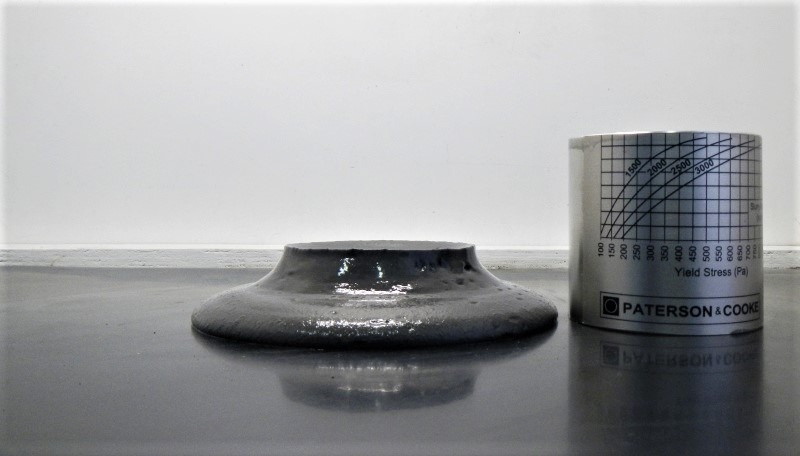
Is There a Place for the Slump Test in the Modern Pastefill Plant?
The ASTM slump test has been the backbone of the pastefill plant quality control program since it was adopted from the concrete industry in the early days of pastefill system … Read More
by Paterson Cooke
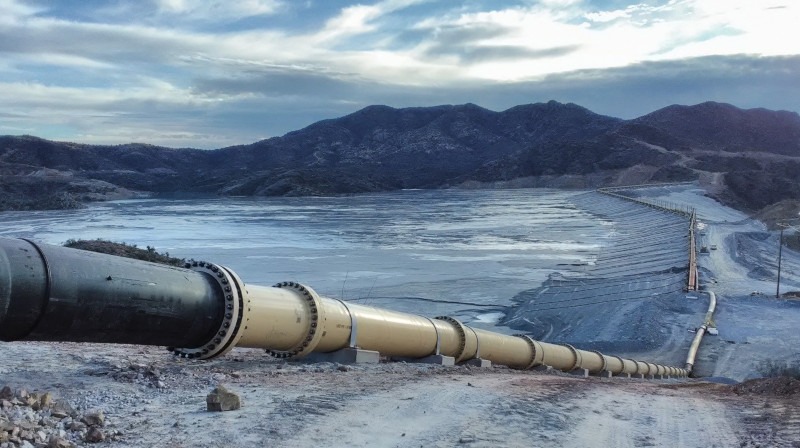
Slack Flow – To Be or Not To Be
I was working with my P&C teammates on a brownfields tailings project where the owner was planning to construct a new tailings storage facility (TSF). The new TSF was adjacent … Read More
by Paterson Cooke

Backfill – Key Properties
When designing an underground mine, one of the key decisions is whether to backfill the voids left by mining. The backfilling decision is generally influenced by a range of factors … Read More
by Paterson Cooke

Backfill Cost Reduction: Designing Around Hydraulic Capability
The use of cemented paste backfill in underground mining is commonplace as a method for tailings disposal, rockmass confinement or minimising convergence between the hanging wall and foot wall of … Read More
by Paterson Cooke

Selecting Slurry Pumps Based on Operating Frequency Map
Many slurry pumping systems in the mining industry operate over a wide range of duties as processing requirements and material properties change. The pump selection must be able to achieve … Read More
by Paterson Cooke

Tailings Pump Station Layout – Planning for the Future
Paterson & Cooke is currently engaged on several tailings pumping system upgrade projects. These are typically associated with increased throughput requirements (associated with a plant expansion), increased pumping head requirement, … Read More
by Paterson Cooke

The Impact of Ore Body Variability on Mine Waste Tailings Disposal Systems
Ore body variability can have a significant effect on the various elements of mine waste tailings disposal systems, including: thickening systems, tailings pump and pipeline systems, and tailings storage facilities. … Read More
by Paterson Cooke

Paste Backfilling on a Budget
Low Capital Investment Options to Support Mining Activities Paste backfill has become known as a superior ground support tool and mine waste disposal method, albeit usually one with a higher … Read More
by Paterson Cooke

Design Review for a Distributed Tailings Deposition System
This paper presents the methodology for distribution system deposition design review and its implementation of a TSF located in Southern Europe.
by Ignacio Bazan

Data Uncertainty Related To Backfilling Operations
A recurring problem in mining projects is the collection and interpretation of data which is applicable to backfilling operations in general. The basis for design is therefore compromised by external … Read More
by Paterson Cooke

Arctic Climate Pipeline Design Considerations
Over the years there has been an increasing trend for resource companies to develop mining projects in cold regions and areas of permafrost. The arctic presents unique engineering challenges. Many … Read More
by Paterson Cooke

Optimising Operating Ranges to Control Backfill Variability
A paste backfill system seldom operates at a fixed operating point and the system always needs to accommodate considerable variability in materials depending on what ore is being mined and … Read More
by Paterson Cooke

Optimise Your Backfill Through Particle Size Manipulation
The global trend of decreasing metalliferous ore grades and increasingly complex mineralogies is leading to finer grind sizes to achieve the necessary liberation for ore beneficiation. The impact of this … Read More
by Paterson Cooke

One Conference, Two Papers and Future Research
The 19th International Conference on Transport & Sedimentation of Solid Particles (T&S) was held in Cape Town in September 2019 and it was a great success. It’s the first time … Read More
by Paterson Cooke

Mine Backfill Forensics – Pastefill Pipe Blockage
Despite the best intentions during the engineering and design phase, things can go amiss in a pastefill system and the pipeline ends up becoming plugged. The first step is … Read More
by Paterson Cooke

Operating Slurry Pipelines with a Deposit
Slurry pipelines are conventionally designed to operate without a deposit on the pipeline invert – i.e. the minimum operating velocity is greater than the deposition velocity. Largely this approach has … Read More
by Paterson Cooke

Technical and Cultural Tour: T&S 2019 Conference
Delegates to the 2019 Transportation & Sedimentation Conference will be treated to a technical tour of the Slurry Test Facility at Paterson & Cooke’s premises in Pinelands on Thursday 26th … Read More
by Paterson Cooke

On-Site Operator Training
Sharing knowledge has always been part of Paterson & Cooke’s culture and as far back as 1995 we began presenting our well-known course on slurry pipeline design to inform our … Read More
by Paterson Cooke

T&S Conference : September 2019
The 19th International Conference on Transport & Sedimentation of Solid Particles will be held in Cape Town from 24 – 27 September 2019. The Cape Town Hotel School, situated close … Read More
by Paterson Cooke

Optimisation of cemented aggregate backfill at New Luika Gold Mine
This paper presents a case study of an optimisation of a CAF material by the addition of tailings in order to increase the paste fraction of the material. The main aim was to decrease the angle of repose to improve filling ability in addition to decreasing the required binder content.
by Bruno Salvoldi

One year of paste operations at Jabal Sayid, Saudi Arabia
This paper presents the history of the project, test work, engineering design and construction, commissioning, and training required to fill the first stope.
 by Rob Brown

Evaluation of a non-Newtonian two-layer model for high concentration suspensions
This paper discusses the use of a non-Newtonian two-layer model to predict the pressure gradient of a high concentration suspension with a sliding bed in laminar flow conditions.
 by Peter Goosen

A Tour of Kidd Mine’s Paste Backfill System
On Friday 29 March 2019, many of the delegates to the Paterson & Cooke Backfill Course held in Sudbury, Ontario, travelled to Timmins, some 290 km away, for a tour … Read More
by Paterson Cooke
Transport & Sedimentation of Solid Particles
For the first time since its inception in Poland in 1971 the International Conference on Transport & Sedimentation of Solid Particles will be hosted outside of Europe. Cape Town, South Africa is … Read More
by Paterson Cooke

New Technology for Tailings Design
Josh Stowe from our Denver office will be presenting a paper at the SME Conference in Denver entitled NEW APPROACHES AND TECHNOLOGY FOR TAILINGS PIPELINE DESIGN AND OPERATION. The conference … Read More
by Paterson Cooke

Triaxial Test Work Capability
Triaxial testing represents international best practise for determining the important geotechnical parameters of shear strength and cohesion of soils. These parameters are important to uncemented backfill applications, but have also … Read More
by Paterson Cooke
Two Papers for the Mining & Industrial Waste Management Conference 2018
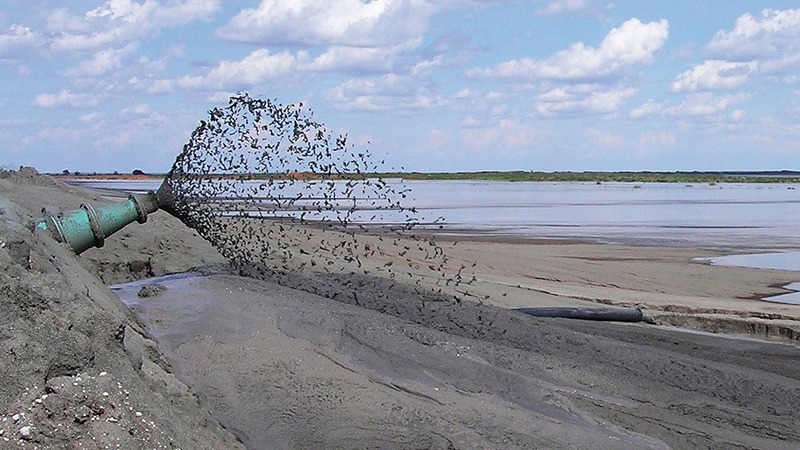
Dr Angus Paterson, a founding member of Paterson & Cooke, will be presenting two papers at the 6th International Mining & Industrial Waste Management Conference being held in Limpopo, South … Read More
by Paterson Cooke

Developments in Tailings Pipeline Transportation
Dr Robert Cooke, a founding member of Paterson & Cooke, will be presenting the following paper at TAILINGS 2018 in Santiago, Chile 11 – 13 July 2018: Developments in Tailings … Read More
by Paterson Cooke
TAILINGS 2018 : Santiago, Chile
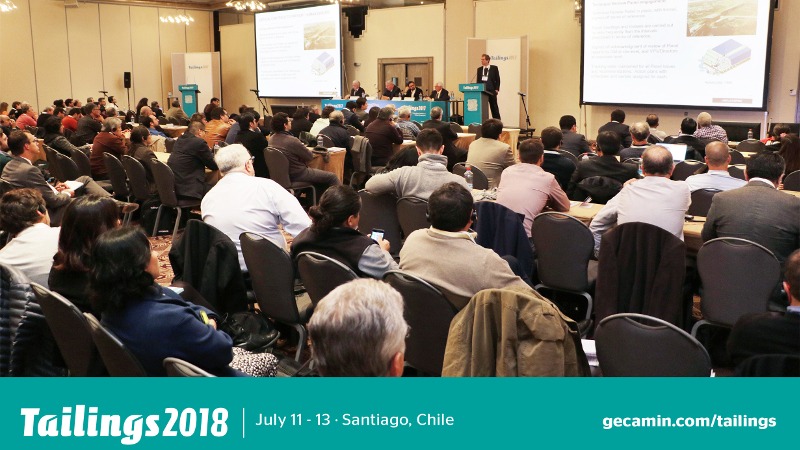
Carlos Salinas, Lars Martinson, Ray Martinson and Paulo Eriz from our Santiago office and Mike Cook from the Denver office have written papers that will be presented at the TAILINGS … Read More
by Paterson Cooke
PASTE 2019 – Save the Date
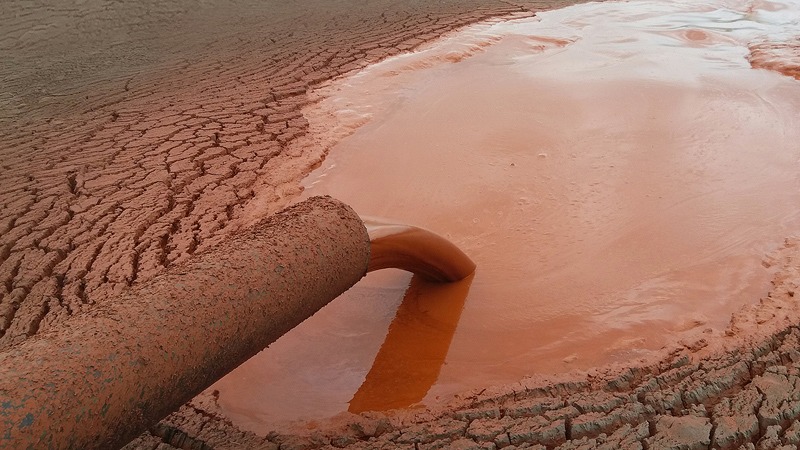
We are pleased to be co-hosting Paste 2019 together with the Australian Centre for Geomechanics. The 22nd International Conference on Paste, Thickened and Filtered Tailings will be held in Cape … Read More
by Paterson Cooke
Paterson & Cooke Cape Town Wins Prestigious Award
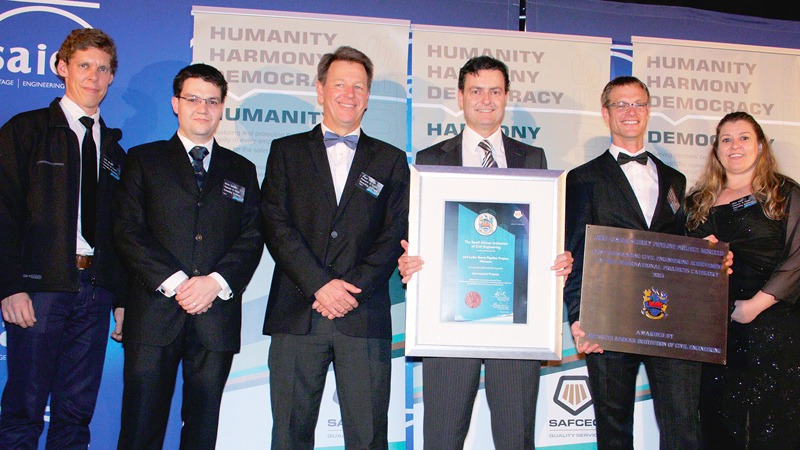
The Cape Town office of Paterson & Cooke, a global specialist engineering consultancy, was presented with the award for BEST INTERNATIONAL PROJECT at the recent SAICE – SAFCEC awards ceremony … Read More
by Paterson Cooke

Mobile Metallurgical Sampler (MMS)
By Fritz van Sittert | Director at Paterson & Cooke Paterson & Cooke Plants & Products has developed a Mobile Metallurgical Sampler (MMS) to determine the potential loss of valuable … Read More
by Paterson Cooke
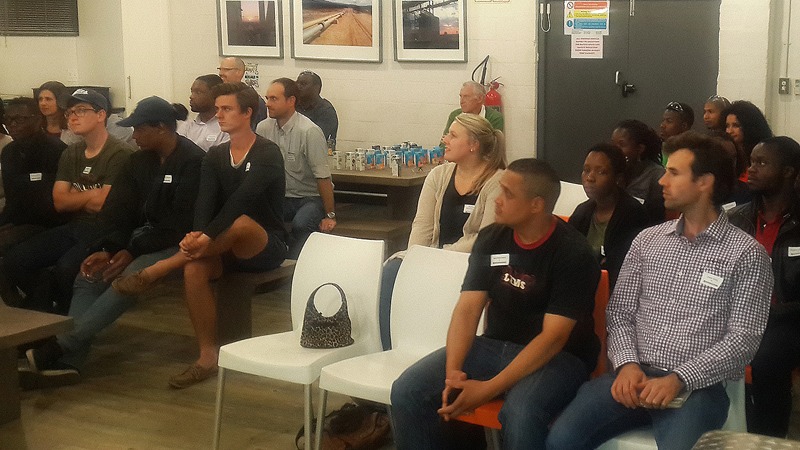
P&C / SASOR Co-host Technical Talk
By Peter Goosen | Director at Paterson & Cooke Paterson & Cooke (P&C), Cape Town, together with The Southern African Society of Rheology (SASOR) recently co-hosted a technical talk and … Read More
by Paterson Cooke

Gwalia mine – backfill system operational review
This paper presents an overview of the review along with an assessment of the current and future reticulation systems, concluding from it a number of value-adding recommendations. Additionally, comment is made on best practice in paste fill system management.
by Stephen Wilson

A critical look at uniaxial test procedures applied in the backfill industry
This paper compares the most commonly used UCS test procedures. The paper will then investigate the effect of the most important parameters influencing test results, such as specimen shape, size and aspect ratios, by presenting laboratory test results for a specifically designed test campaign.
 by Bernardt van der Spuy

Pipe loop tests at Codelco pilot plant
This paper describes the general configuration of the pilot plant, specifically the pipe loop tests.
 by Lars Martinson

Thickened tailings – a water and energy consumption perspective
The purpose of this study was to determine the optimum thickened target density for the slimes generated by the pilot plant by considering both water and energy consumption.
by Angus Paterson

The pipeline transport of high density slurries — a historical review of past mistakes, lessons learned and current technologies
The objective of this paper is to address these issues by tracing the historical development of high density pumping and why the problems of the past are not necessarily the same problems of today.
by Angus Paterson

Paste backfill design case study — Efemçukuru project
Paterson & Cooke completed the basic engineering of the paste backfill reticulation system for Eldorado Gold’s Efemçukuru project in Turkey. This paper presents a case study of the project.
 by Robert Cooke

Energy induced rheology reduction of flocculated thickened tailings — pipeline system design methodology
This case study from the Jabal Sayid Mine demonstrates how operating procedures, and particularly a well-designed exclusion zone with catchment berm, successfully mitigated the consequences of a wall failure.
by Robert Cooke