


Paterson & Cooke, globally recognised for its expertise in slurry pipeline engineering, tailings management, and backfill systems, continues to expand its hydrometallurgical and mineral processing capabilities at the Cape Town office. This development positions the Cape Town facility as a centre of excellence for integrated process testing and flowsheet development, from Run-of-mine to tailings disposal.
What is Hydrometallurgy?
Hydrometallurgy is a branch of extractive metallurgy that uses aqueous chemistry to recover and purify metals from ores, concentrates, and recycled materials.
It typically involves three main stages:
- leaching (to dissolve the desired metals),
- solution purification (to remove impurities),
- and metal recovery (through methods such as precipitation, solvent extraction, or electrowinning).
This process offers several advantages, including selective metal recovery from low-grade or complex feedstocks, lower environmental impact and energy consumption compared to pyrometallurgy, and scalability from laboratory to industrial scale.
Hydrometallurgy is often integrated with mineral processing steps such as milling and flotation, which concentrate the valuable minerals and produce a feed material with optimal characteristics for leaching, thereby enhancing overall metal recovery efficiency.
Newly Commissioned and Upcoming Facilities
To meet growing industry demand for process development support, the Cape Town office has commissioned a suite of advanced laboratory and pilot-scale facilities for simulating, evaluating, and optimising full metallurgical circuits.

Key capabilities include:
- Pilot Ball Milling and Flotation Plant:
A continuous system processing up to 500 kg/h of ROM material, ideal for producing representative flotation concentrate and tailings for downstream test work. - Mini Continuous Flotation Plant:
Operating at 5–10 kg/h, this setup includes: 8 Rougher Cells, 4 Scavenger Cells and 2 Cleaner Cells to support comprehensive and flexible flotation flowsheet testing. - Laboratory-Scale Leaching Capabilities: CSTR Leaching Units, Bottle Roll Testing
These facilities allow for kinetic evaluation and initial leaching reagent optimisation on a laboratory scale. - Continuous Leaching: Designed to process 3–10 kg/h of feed material, this plant will consist of six leaching tanks in series for continuous kinetic and reagent performance evaluation.
- CCD Circuit: This unit will include six thickener stages in series, enabling simulation of counter-current decantation for assessing wash efficiency and solid-liquid separation in leach residue processing.
Delivering Value to our Clients
The expansion of Paterson & Cooke into mineral processing and hydrometallurgy offers several key benefits to clients:
- Integrated Process Solutions: Clients gain access to a full value-chain service—from mineral processing (milling, flotation) to hydrometallurgical recovery (leaching, SX/EW, CCD). This streamlines project execution and improves technical consistency across stages.
- Improved Tailings and Slurry Design: By linking upstream mineral processing with Paterson & Cooke’s core expertise in tailings and slurry transport, clients benefit from tailings streams that are more representative, predictable, and better engineered for transport, deposition, or reprocessing.
- Pilot-Scale Testing and De-Risking: The availability of continuous pilot-scale milling, flotation, leaching, and CCD allows clients to validate flowsheets, optimise reagent schemes, and generate realistic data for scale-up—reducing technical and financial risks in full-scale implementation.
- Custom Development and Flexibility: With in-house capability to simulate real process conditions at both bench and pilot scale, Paterson & Cooke can tailor test work to the specific needs of each project, offering flexibility for complex or novel ore types.
- Faster Project Turnaround: Having all testing services under one roof reduces time lost in transferring samples between facilities, coordinating between different contractors, or dealing with incompatible test data.
- Expanded Expertise and Innovation: Clients benefit from a multidisciplinary team that now includes mineral processing and hydrometallurgical specialists working alongside slurry transport engineers—leading to more innovative and technically sound project solutions.
- Cost and Logistical Efficiency: Consolidating services with a single, trusted provider can lead to reduced overheads, streamlined communication, and more efficient project planning and execution.
Strategic Vision and Future Capabilities
The Cape Town office is planning to commission further metallurgical and pilot-scale test work to support integrated metallurgical flowsheet development — from concentrate to final metal recovery, including:
- Solvent Extraction (SX)
- Ion Exchange (IX)
- Elution
- Electrowinning (EW)
In Conclusion
Paterson & Cooke’s Cape Town laboratory now offers a comprehensive platform for mineral processing and hydrometallurgical test work, enabling:
- Early-stage process and flowsheet development
- Pilot-scale de-risking for commercial implementation
- Seamless integration with the design of backfill process plants, slurry transport systems, and holistic tailings management solutions that includes thickened paste and filtered tailings
This expanded capability firmly establishes Paterson & Cooke’s Cape Town office as a leading centre for end-to-end metallurgical process development in Africa.
Click here for more information regarding our Laboratory Services or contact us today.
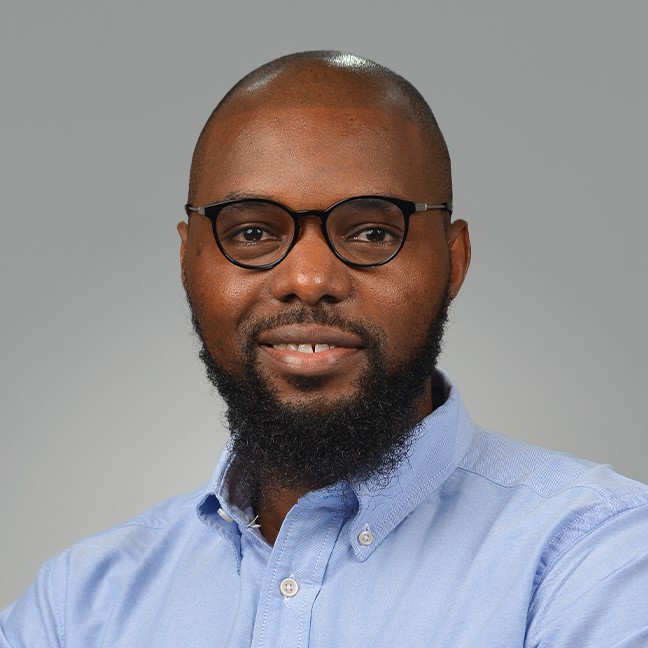
MSc Metallurgical Eng
Jean Jacques Mbayo is a Project Engineer at Paterson & Cooke, specialising in hydrometallurgy and mineral processing with a strong focus on the treatment of refractory gold ores, including CIL/CIP leaching processes and metal recovery systems.
He holds a Master’s degree in Metallurgical Engineering and a Bachelor of Science in Chemical Engineering, and is currently advancing his expertise as a PhD candidate in Metallurgical Engineering. With years of industry experience as a metallurgist and in research, he also specialises in the design and commissioning of reactors.