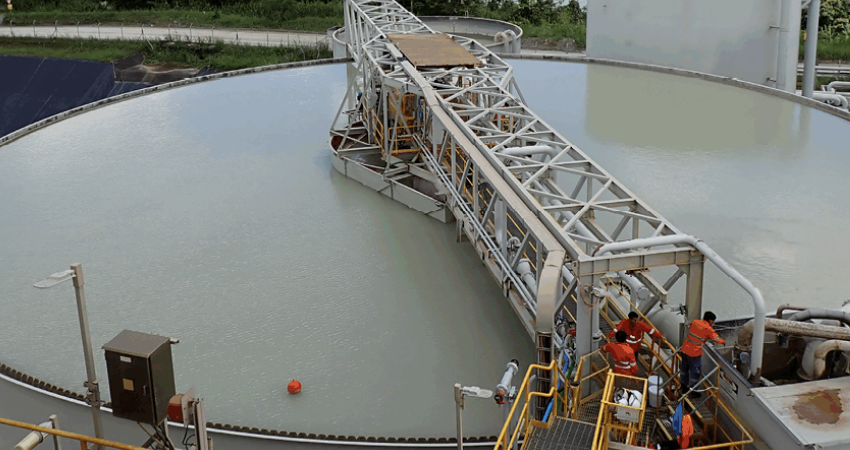
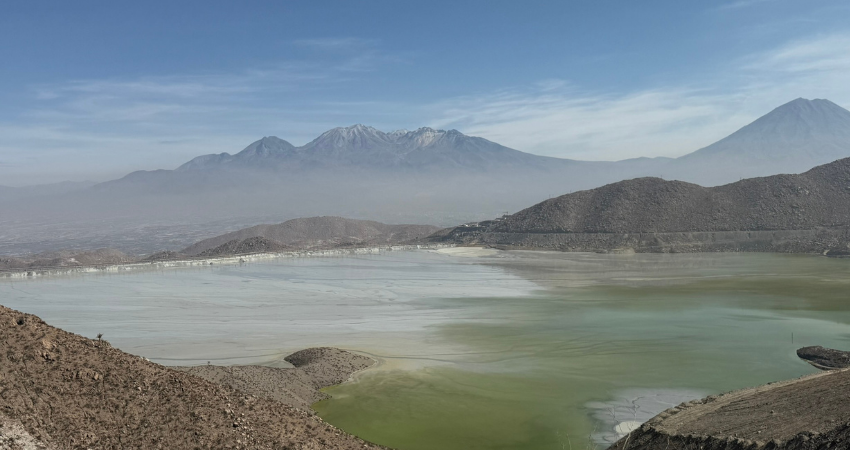
The article explores the growing importance of effective tailings water management as mining operations face increasing pressure to reduce water consumption, improve environmental performance, and adapt to site-specific challenges.
Author: Rachel Jansen
Rethinking Tailings Management in a Changing Mining Landscape
Industry evaluations often default to cost-focused comparisons, typically capital and operating cost of the process equipment, tailings transportation system, or material handling fleets. Given growing concerns around water scarcity, this article highlights the need for a holistic, systems-based approach that integrates technical, environmental, and operational drivers.
Static Cylinder Settling Test – A Simple Test That Delivers High Value
Static cylinder settling tests are a fundamental part of understanding slurry settling behaviour. Although the procedure is simple, the test provides valuable insights into slurry system surface chemistry and solid-liquid interaction, allowing optimisation of tailings dewatering.
Understanding Coagulation & Flocculation in Slurries
Efficient slurry dewatering is key to many mining and mineral processing operations, and two of the most important processes involved are coagulation and flocculation. This short demonstration provides a clear and practical look at the fundamentals of coagulation and flocculation to optimise reagent usage.
Understanding the Bench Scale Dynamic Thickener Test – A Key Step in Thickener Design
In this short video, we showcase the Bench Scale Dynamic Thickener Test, a critical laboratory procedure used to evaluate the settling behaviour and underflow characteristics of slurries in a controlled environment.
A Holistic Approach to Large-scale Alternative Dewatered Tailings Management: Lessons from Case Studies
Large-scale alternative dewatered tailings applications are increasingly being considered in the mining industry in an era of water scarcity and focus on dam structural integrity. However, evaluating business cases for these applications is often ineffective when based on costs alone. This paper makes the case for a new, more holistic approach to create effective business cases for evaluating large-scale alternative dewatered tailings applications.